

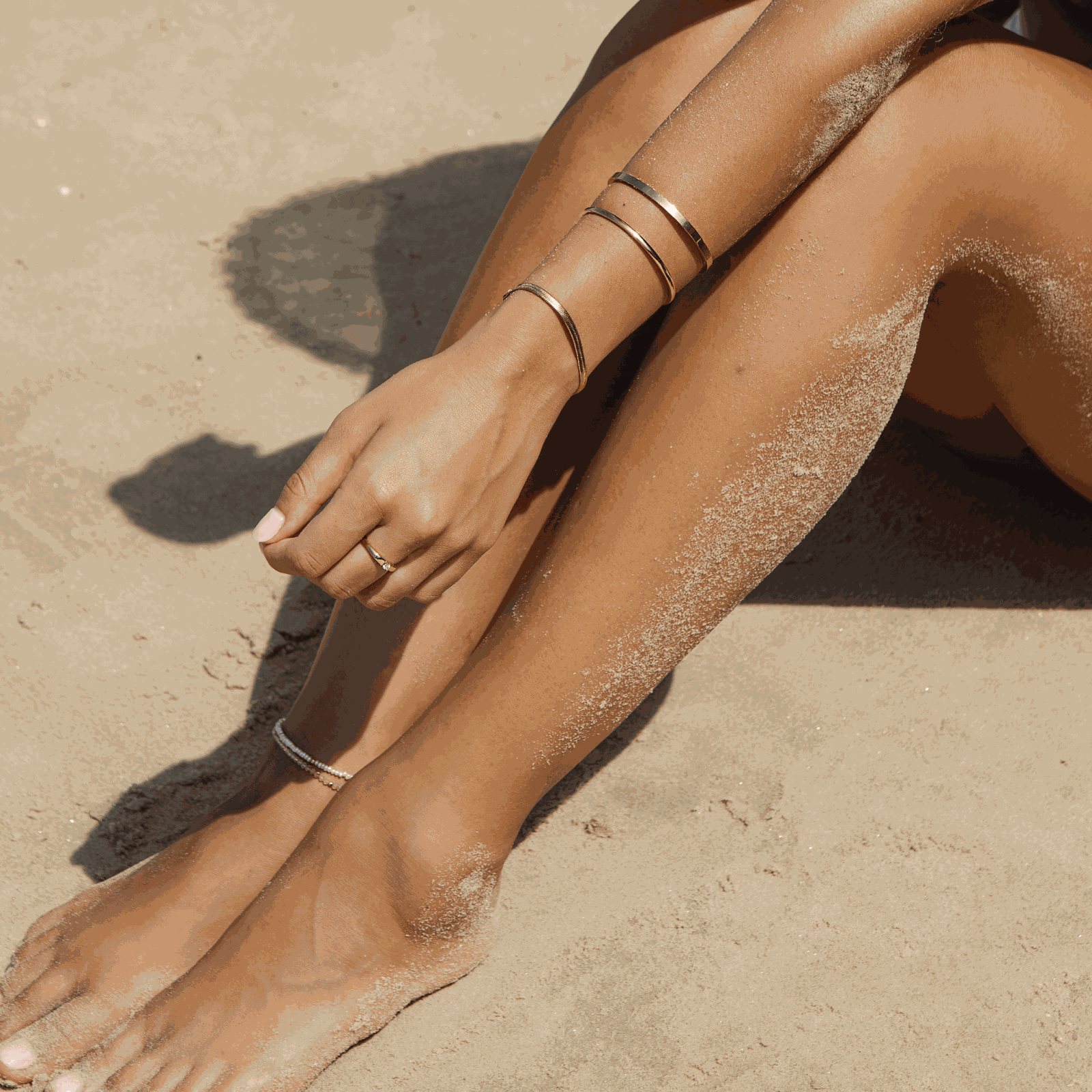
Questioning Waterproof Jewellery Claims for Beach Holidays
Make Your Beach Jewelry Work as Hard as Your SPF
Waterproof jewelry sounds perfect for a beach holiday. You want pieces you can put on once, wear from the airport to the pool, and not stress about every swim or shower. With people planning winter getaways from Australia and chasing long European summer days, it is natural to search for jewelry that promises to keep up.
But what does waterproof jewelry really mean when you add saltwater, sunscreen, sweat, and sand into the mix? Can anything you buy for everyday wear truly handle daily ocean dips like your swimsuit does? Here we are breaking down what those claims usually mean, what to pack, and how to keep your pieces looking good long after the trip is over.
At Mezi, we design modern, easy-to-wear pieces for real life in and out of the water. We love low-fuss jewelry, and many of our styles are made to handle more than just a quiet office day. At the same time, we want to stay honest about care and longevity so you know what to expect when you take your jewelry on holiday.
What Waterproof Jewelry Really Means
In fashion and demi-fine jewelry, there is no strict standard for the word waterproof. Most brands use it as short-hand for more resistant to water and tarnish, not truly immune to damage. It usually means the plating and base metal are better prepared for some contact with water, not that you can live in the ocean with it.
You will also see a mix of other terms, each with slightly different hints:
- Waterproof: usually means the brand is confident with regular contact with water, like hand washing or light swimming
- Water resistant: generally fine around water, but not meant for long soaks or harsh chemicals
- Tarnish resistant: focuses on the finish staying bright with normal wear, including some humidity and sweat
- Sweat proof: made for gym days and hot weather, less about long saltwater exposure
Behind the scenes, these claims often come down to details like:
- Type of base metal, such as stainless steel or brass
- Plating method, like PVD or IP plating
- Plating thickness, often measured in microns
- Any extra clear coatings applied over the metal
For most pieces in the fashion and demi-fine space, you can expect them to handle:
- Occasional dips in the pool or ocean
- Quick showers or washing your hands
- Humidity and sweat on travel days
What they are generally not built for is:
- Long, daily ocean swims over many weeks
- Sleeping, swimming, sweating and never rinsing or drying
- Heavy chemicals like strong pool chlorine or hot tubs
It also helps to keep expectations realistic. A solid gold ring will react very differently to daily ocean swims than a $50 plated pair of earrings. That does not mean the earrings are bad, it just means they need a little more care and a bit less extreme exposure.
Salt, Sunscreen and Chlorine: Your Jewelry’s Real Enemies
Water alone is usually not the main issue. The real trouble for jewelry on holiday is what comes with it: salt, chlorine, sand, sunscreen and even fake tan.
Saltwater can:
- Slowly corrode some base metals
- Dull the shine of plating over time
- Affect tiny joins, clasps and chains with repeated exposure
Chlorine in pools and hot tubs is often harsher than seawater. It can:
- Fade or discolor plating
- Weaken adhesives that hold some stones or pearls
-
Make delicate parts more brittle over time
Then there are the sneaky extras:
- Sand acts like tiny grit and can scratch softer metals and finishes
- Thick sunscreen, oils and fake tan can build up around stones and textures
- Sweat plus sunscreen can leave a film that makes metals and stones look cloudy
This does not mean you can never wear jewelry in the water. It just means your pieces need a bit of help. A quick rinse in fresh water and a gentle dry after swimming can make a big difference to how they age.
Materials That Behave Better on Beach Holidays
Some metals and finishes tend to hold up better around water, sweat and heat than others. When you are choosing jewelry for a beach trip, it pays to be a little selective.
Here is a simple guide:
- Stainless steel: usually very strong, often a good choice for water-friendly pieces
- Titanium: light, usually hypoallergenic, and generally handles moisture well
- Gold vermeil: thick gold plating over sterling silver, nicer finish but still needs care with daily swimming
- Thick gold-plated brass: can look beautiful, but does better with limited long soaks
- Solid gold: usually the most stable for frequent water exposure
- Sterling silver: can darken faster with salt and chemicals, but can often be polished back
For sensitive skin in hot, humid, salty environments, hypoallergenic metals and quality finishes matter, especially for earrings you keep in all day on flights, beach walks and dinners. Irritation is the last thing you want when you are away.
At Mezi, we focus on modern designs that feel light and easy to wear, with many pieces made from hypoallergenic and often water-friendly finishes. We also love durable stones like moissanite and pearls that still feel special on holiday but are practical enough for long days out.
How to Test Waterproof Claims Before You Pack
Before those new earrings or bracelets earn a spot in your beach bag, it helps to ask a few quick questions and do some simple checks at home.
Questions to ask or look for in product details:
- What is the base metal? Stainless steel, brass, sterling silver or another metal?
- What type of plating is used? PVD, IP plating, gold vermeil or standard plating?
- Is the plating thickness mentioned, such as a micron level?
- Does the warranty or care guide mention water or swimming at all?
At home, you can also look at:
- Weight and feel: light but not flimsy usually signals better construction
- Finish: smooth, even color with no patchy spots
- Clasps and joins: do they feel secure, with no sharp edges or gaps?
- Stones: are they set neatly, with no visible glue or loose settings?
Brands that care about longevity tend to be open about their materials and finishes. Clear information helps you build a little beach capsule jewelry collection so you are not throwing random pieces into your case.
For that capsule, it can help to:
- Choose 1 or 2 pairs of earrings that are comfortable for all-day wear
- Add 1 everyday necklace that layers with different necklines
- Include 1 bracelet or anklet that feels secure for active days
- Leave delicate, sentimental or very fine pieces at home
Make Your Vacation Jewelry Last Long After the Trip
Even the most water-friendly jewelry enjoys a little post-swim care. It does not have to be complicated or time-consuming.
A simple routine:
- After swimming, rinse jewelry in fresh, lukewarm water
- Pat dry with a soft cloth, especially around clasps and stones
- At the end of the day, wipe away sunscreen or sweat buildup
- Store pieces in a soft pouch or separate sections of your travel case
You can also decide which pieces are for water and which are for the deck only. For example:
- Simple hoops or studs can be your swim-safe earrings
- A clean chain or sturdy bracelet can handle more activity
- Bridal pieces, moissanite styles and very delicate items can be saved for dinners, ceremonies and dry land
At Mezi, we want your jewelry to move from beach club days to city coffee runs without losing its shine too fast. By choosing honest, well-made pieces and pairing them with realistic care, your so-called waterproof jewelry can stay beautiful long after the holiday glow has faded.
Enjoy Effortless Style With Jewelry You Never Have To Take Off
Discover how easy it is to look put-together every day with Mezi pieces that keep up with your lifestyle. Explore our collection of waterproof jewelry designed to stay bright through showers, workouts, and daily wear. If you have questions about styling, care, or choosing the right piece, feel free to contact us so we can help you find your new favorites.